




Obstructive Sleep Apnea in Women: The Silent Disorder We Often Miss
Contact Us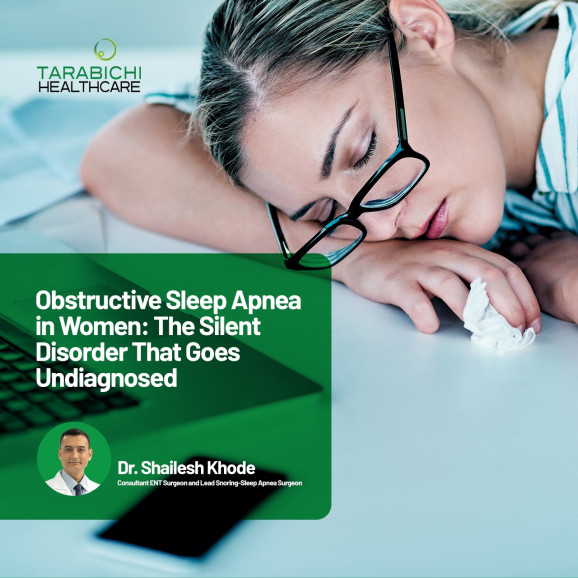
Obstructive Sleep Apnea in Women: The Silent Disorder We Often Miss
Obstructive Sleep Apnea (OSA) is one of the most common sleep-related breathing disorders worldwide. Although it has traditionally been seen as more common in men, growing scientific evidence shows that women are also significantly affected, but often underdiagnosed.
We, Snoring-Sleep Apnea Specialists, recognize that sleep apnea in women can present differently. Understanding these differences is essential for accurate diagnosis and personalized treatment in Dubai and beyond.
Why Sleep Apnea in Women Is Often Missed
The classic symptoms of sleep apnea, such as loud snoring, witnessed pauses in breathing, and excessive daytime sleepiness, are more commonly seen in men.
Women, however, often experience more subtle and nonspecific symptoms such as
- Persistent fatigue rather than sleepiness.
- Insomnia and difficulty staying asleep.
- Morning headaches.
- Mood changes such as anxiety or depression.
- Poor concentration and memory problems.
Because these symptoms can overlap with stress, hormonal changes, or lifestyle factors, many women remain undiagnosed or misdiagnosed for years. That is why awareness of female sleep apnea symptoms and early sleep apnea evaluation are so important.
The Influence of Hormones Across a Woman’s Life
Hormonal changes play a major role in sleep quality and breathing patterns.
Premenopausal Women
Estrogen and progesterone help maintain airway stability. As a result, the risk of OSA is generally lower unless other factors are present.
Pregnancy
During pregnancy, airway swelling and reduced lung capacity can increase the risk of sleep-disordered breathing. This may also be associated with complications such as hypertension and gestational diabetes.
Menopause
With menopause, the protective effect of hormones declines. This can lead to increased airway collapsibility, upper body fat distribution, especially in neck spaces, more fragmented sleep, and a higher prevalence of sleep apnea.
These changes show why sleep apnea risk can increase with age and hormonal transitions, especially in women’s sleep health.
How Sleep Apnea Differs in Women
Sleep studies have shown that women with OSA may present differently from men.
Women are more likely to have:
- Partial airway obstruction (hypopneas) is more common than complete apneas.
- More events during REM sleep.
- Increased sleep fragmentation and frequent awakenings.
- A lower Apnea-Hypopnea Index (AHI), even when symptoms are significant.
This means many women may have clinically important sleep apnea even when standard test results appear only mildly abnormal.
Common Symptoms in Women
Women with sleep apnea may notice symptoms such as the following:
- Unrefreshing sleep.
- Insomnia.
- Morning headaches.
- Night-time urination (nocturia).
- Mood changes, anxiety, or depression.
- Memory and concentration difficulties.
Snoring may also be present, but it is often underreported, especially in the early stages. If these symptoms sound familiar, a sleep study may help identify the problem early and support timely snoring treatment.
Conditions That Increase Risk
Certain conditions are more commonly linked with sleep apnea in women, including:
- Polycystic Ovary Syndrome (PCOS).
- Insomnia (COMISA—Co-morbid Insomnia and Sleep Apnea).
- Restless Legs Syndrome.
- Depression and anxiety disorders.
These overlapping conditions can make diagnosis more difficult, so a comprehensive sleep apnea assessment is often needed. In many cases, insomnia and sleep apnea can occur together and worsen overall sleep quality.
Health Risks of Untreated Sleep Apnea
If left untreated, OSA can lead to serious health problems, including:
- High blood pressure.
- Cardiovascular disease.
- Stroke.
- Diabetes.
- Reduced quality of life.
In pregnant women, untreated sleep apnea may also increase the risk of:
- Pre-eclampsia.
- Gestational diabetes.
- Adverse fetal outcomes.
This is why timely diagnosis and sleep apnea treatment are crucial.
Diagnosis: Why a Specialized Approach Matters
Standard screening questionnaires may not always detect sleep apnea in women.
A proper evaluation may include:
- Detailed clinical history.
- Sleep study, either in the hospital or at home.
- Airway assessment.
- Drug-Induced Sleep Endoscopy (DISE), which allows real-time evaluation of the airway during sleep.
- Phenotype-based, personalized assessment.
For women with complex symptoms, a specialized sleep apnea clinic can offer a more accurate and targeted diagnosis. A detailed assessment by Snoring-Sleep Apnea Specialist can also help identify structural airway issues that may contribute to sleep-disordered breathing.
Sleep Apnea Care at Tarabichi Healthcare
At Tarabichi Healthcare, we understand that sleep apnea in women is often overlooked because the symptoms can be subtle and easily mistaken for stress, insomnia, or hormonal changes. Our approach focuses on careful evaluation, accurate diagnosis, and personalized treatment for patients seeking sleep apnea treatment in the United Arab Emirates.
Our sleep apnea care combines detailed clinical assessment, sleep study options, airway evaluation, and advanced treatment planning based on each patient’s specific symptoms and needs. For patients who require a more targeted approach, we also consider diagnostic tools such as Drug-Induced Sleep Endoscopy (DISE) to better understand the site and pattern of airway collapse during sleep.
Whether symptoms begin during pregnancy, appear after menopause, or are related to persistent snoring, fatigue, or poor sleep quality, our goal is to help patients receive the right diagnosis and the right treatment at the right time. As a trusted sleep apnea clinic in United Arab Emirates, Tarabichi Healthcare is committed to delivering expert, patient-centered care for better sleep and better health.
Treatment: Personalized for Women
Management of sleep apnea in women should be individualized based on the cause, severity, and sleep pattern.
1. CPAP Therapy
CPAP therapy is highly effective in keeping the airway open during sleep. Pressure settings and follow-up should be tailored for comfort and effectiveness. Select an appropriate mask as per patient's phenotype (e.g. nasal mask or full mask or nasal pillow).
2. Surgical Treatment
In selected patients, surgery may be recommended to correct the airway collapse site, based on DISE findings and clinical evaluation.
3. Insomnia Management
If insomnia is also present, Cognitive Behavioral Therapy for Insomnia (CBT-I) can be helpful. Medications may be considered, when necessary, with referral to the appropriate subspecialist.
4. Lifestyle and Hormonal Considerations
Weight management, sleep hygiene, and attention to hormonal influences may also support treatment outcomes. This is especially relevant for menopause and sleep apnea, as well as pregnancy and sleep apnea.
When Should You Seek Help?
Women should consider evaluation if they experience the following:
- Persistent fatigue despite adequate sleep.
- Poor sleep quality or insomnia.
- Mood changes or unexplained anxiety.
- Snoring or disturbed sleep.
- Sleep problems during menopause or pregnancy.
If these symptoms are affecting your daily life, speaking to a sleep apnea specialist can be the first step toward better sleep.
Sleep apnea in women is common, complex, and often overlooked. The differences in symptoms, hormonal influences, and sleep patterns make it essential to use a gender-specific approach to diagnosis and treatment.
At Tarabichi Healthcare, we are committed to delivering advanced, personalized care to help patients achieve better sleep and better health.
Take the First Step
If you suspect sleep apnea:
- Book your consultation today with your snoring-sleep apnea specialist.
- Better sleep starts with the right diagnosis.
For Consultations and Appointments, reach out to us at