




The Implant for Sleep Apnea in UAE | The Latest Bilateral Hypoglossal Nerve Stimulation Therapy Beyond CPAP
Contact Us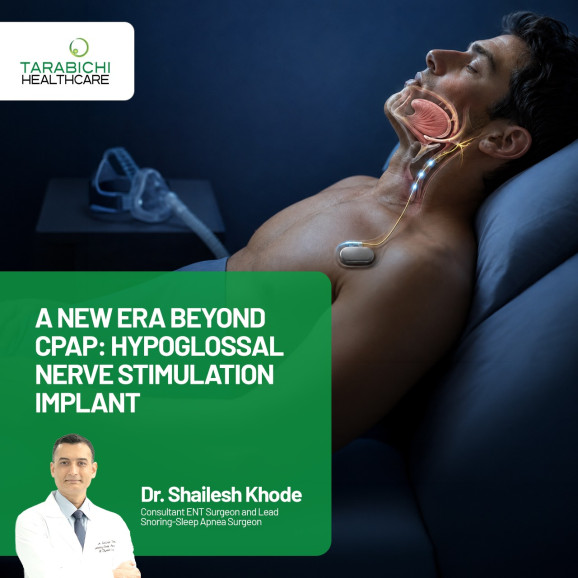
Medically reviewed By Dr. Shailesh Khode | Consultant & Lead Snoring and Sleep Apnea Surgeon, Tarabichi Healthcare, Dubai
“A Revolutionary Approach for Patients Who Cannot Tolerate CPAP Therapy”
Obstructive Sleep Apnea (OSA) is one of the most common sleep-related breathing disorders, affecting millions of people worldwide. It happens when the muscles of the upper airway relax during sleep, causing the airway to repeatedly narrow or close completely.
If you have OSA, you may recognise some of these symptoms:
- Loud, habitual snoring
- Witnessed pauses in breathing during sleep
- Choking or gasping episodes
- Poor-quality sleep
- Morning headaches
- Excessive daytime sleepiness
- Reduced concentration and performance
Left untreated, moderate-to-severe sleep apnea can raise the risk of high blood pressure, heart disease, stroke, diabetes, and a reduced quality of life.
Continuous Positive Airway Pressure (CPAP) remains the first-line treatment for moderate-to-severe OSA, and it works extremely well when used consistently. But many patients find it hard to stick with long-term, often because of:
- Mask discomfort
- Air leakage
- Nasal obstruction
- Claustrophobia
- Difficulty travelling with the machine
- Simply struggling to sleep well while wearing it
If this sounds familiar, you're not alone, and CPAP isn't the end of the road. For carefully selected patients who cannot tolerate CPAP, Hypoglossal Nerve Stimulation (HNS) offers an advanced surgical alternative.
What Is Hypoglossal Nerve Stimulation?
The hypoglossal nerve is the 12th cranial nerve, and it controls the movement of your tongue. During sleep, the tongue muscles relax and the tongue can fall backward, contributing to airway obstruction.
Hypoglossal nerve stimulation works like a “pacemaker for the tongue.” While you sleep, the implanted device delivers controlled electrical stimulation to the hypoglossal nerve, gently activating the tongue muscles and moving the tongue forward. This keeps the airway open and helps you breathe more easily through the night.
Unlike CPAP, which uses external air pressure to hold the airway open, hypoglossal nerve stimulation treats one of the underlying anatomical causes of airway collapse directly.
Bilateral Hypoglossal Nerve Stimulation, Now Available in the UAE
Sleep surgery has advanced significantly with the development of implantable neurostimulation therapies. Bilateral stimulation activates both sides of the hypoglossal nerve at once, providing:
- Coordinated activation of the tongue muscles
- Balanced tongue movement
- More effective opening of the upper airway during sleep
A Leadless, Battery-Free Implant
Conventional systems require a chest implant containing a battery and pulse generator. The bilateral system is different:
- A small stimulator is placed under the chin
- There is no implanted battery
- There is no chest incision
- An external wearable device activates the therapy during sleep
This simpler design reduces implant complexity and can offer real advantages for the right patients.
A Minimal, Cosmetic Implant Design
The implant is placed through a small incision below the chin, which means:
- The implant location is hidden
- There's no visible external hardware during the day
- The surgical footprint is small
- Recovery is short
Who Is a Suitable Candidate?
Hypoglossal nerve stimulation isn't right for every patient with sleep apnea, which is why a thorough specialist evaluation always comes first. Candidacy is based on several factors considered together.
1. Confirmed Moderate-to-Severe Obstructive Sleep Apnea
Usually, this means an Apnea-Hypopnea Index (AHI) of 15–65 events per hour, with predominantly obstructive events confirmed on a sleep study.
2. CPAP Intolerance or Failure
- Genuine difficulty tolerating CPAP despite appropriate support
- Poor mask acceptance
- Persistent symptoms affecting quality of life
CPAP remains an important, effective treatment, but HNS offers a real alternative for appropriately selected patients.
3. Suitable Airway Anatomy
A detailed airway evaluation may include:
- Flexible endoscopy
- Drug-Induced Sleep Endoscopy (DISE), performed by an experienced sleep surgeon
- Assessment of tongue base collapse
- Evaluation of the palate and lateral pharyngeal wall
Patients with obstruction at multiple levels of the airway may benefit from additional airway procedures alongside HNS therapy.
4. Body Weight Assessment
Weight management is an important part of OSA treatment overall, and patients within an appropriate BMI range generally see better outcomes from HNS.
Preoperative Assessment Before HNS Implantation
Before moving ahead, we carry out a comprehensive evaluation that includes:
- Detailed sleep history & Sleep questionnaire assessment
- Sleep study review
- CPAP compliance assessment
- Upper Airway examination
- DISE evaluation
- A discussion of alternative treatment options
Every patient receives an individualised treatment plan built around this assessment.
How Is the HNS Implant Surgery Performed?
HNS implantation is performed under general anaesthesia by an experienced sleep surgeon, in three main steps.
Step 1: A Small Chin Incision
A small incision is made under the chin to access the muscles and nerve structures responsible for tongue movement.
Step 2: Implant Placement
The implant is carefully positioned near the branches of the hypoglossal nerve. The device is designed to stimulate both sides of the tongue muscles.
Step 3: Wound Closure
The incision is closed with close attention to cosmetic appearance.
Hospital Stay and Recovery
Most patients:
- Stay overnight for observation
- Go home the following day
- Gradually resume normal activities
The procedure is generally well tolerated, with a relatively short recovery period.
When Is the HNS Implant Activated?
The device is switched on after a healing period, typically around 6–8 weeks after surgery. During activation:
- Stimulation settings are customised to you
- Your comfort is carefully assessed
- Therapy intensity is increased gradually
Further fine-tuning may follow, based on your symptoms and sleep study results.
Clinical Outcomes of Hypoglossal Nerve Stimulation
Clinical studies have shown improvements in:
- Apnea severity
- Oxygen saturation
- Snoring
- Sleep quality
- Daytime alertness
- Quality of life
Many appropriately selected patients see a significant reduction in their AHI, along with a real improvement in sleep-related symptoms. The BLAST OSA clinical study, which evaluated bilateral hypoglossal nerve stimulation, showed encouraging safety and effectiveness outcomes.
Possible Risks and Complications
As with any surgical procedure, it's important to understand the potential risks.
Surgical risks
- Infection
- Bleeding
- Temporary discomfort
- Scar-related issues
Device-related considerations
- Awareness of stimulation
- Need for programming adjustment
- Tongue discomfort during early therapy
- Rare device malfunction
Regular follow-up allows us to fine-tune your settings and manage any of these issues promptly.
Can Additional Sleep Surgery Improve HNS Outcomes?
Obstructive sleep apnea is often caused by obstruction at more than one level of the airway:
- Nose
- Soft palate
- Tonsils
- Tongue base
- Epiglottis
HNS primarily addresses tongue-related airway collapse, so in selected patients, combining it with additional airway procedures can improve overall outcomes.
Nasal surgery
Examples: septoplasty, turbinate reduction, or nasal valve surgery.
Benefits: improved nasal breathing, reduced nasal resistance, and better overall sleep quality.
Palatal surgery
Selected patients may benefit from barbed reposition pharyngoplasty, using techniques tailored to the pattern of collapse. It's worth noting that traditional UPPP is now considered outdated, as its outcomes are unpredictable and it carries a higher risk of complications and treatment failure.
Tongue base and epiglottic surgery
When indicated, lingual tonsillectomy or epiglottoplasty (for primary epiglottis collapse) can complement hypoglossal nerve stimulation. A personalized, multilevel approach gives you the best chance of a successful outcome.
HNS Implant in Down Syndrome Patients
Patients with Down syndrome face a significantly higher risk of obstructive sleep apnea, due to:
- Reduced muscle tone
- Relatively larger tongue size
- Craniofacial differences
- Obstruction at multiple levels of the airway
Many continue to have significant OSA even after adenotonsillectomy, and often struggle with CPAP compliance. Hypoglossal nerve stimulation has become an important treatment option for selected adolescents and adults with Down syndrome. Published studies have shown:
- A significant reduction in AHI
- Improved oxygen levels
- Better sleep quality
- Improved quality of life
Is the HNS Implant a Cure for Sleep Apnea?
Hypoglossal nerve stimulation can provide long-term control of obstructive sleep apnea in carefully selected patients. However, getting the best results calls for:
- Appropriate patient selection
- Long-term follow-up
- Weight management
- Lifestyle modification
- Ongoing optimisation of therapy settings
Sleep apnea treatment is never one-size-fits-all. The best outcomes come from a comprehensive approach that addresses your individual anatomy and the severity of your condition.
HNS Sleep Apnea Implant Programme in the UAE
Advanced evaluation and management of obstructive sleep apnea with bilateral hypoglossal nerve stimulation is available through the Tarabichi Stamberger Ear-Sinus Institute (TSESI), Sleep Apnea Center, Dubai. The program provides:
- Complete sleep apnea evaluation
- Sleep study assessment
- CPAP intolerance evaluation
- Airway assessment
- Drug-induced sleep endoscopy when required
- Multilevel sleep surgery planning
- HNS implant suitability assessment and follow-up
About the Author
Dr. Shailesh Khode is a Consultant and Lead Snoring and Sleep Apnea Surgeon at Tarabichi Healthcare in Dubai. He specialises in advanced airway surgery, drug-induced sleep endoscopy, and implantable neurostimulation therapies for obstructive sleep apnea, bringing an evidence-based, precision-medicine approach to every patient's care.
Frequently Asked Questions
Q1: What is hypoglossal nerve stimulation, and how does it treat sleep apnea?
Hypoglossal nerve stimulation uses a small implant to stimulate the nerve that controls tongue movement. This helps move the tongue forward during sleep, keeping the airway open and reducing obstruction.
Q2: Am I a candidate for the sleep apnea implant if CPAP hasn't worked for me?
Possibly. HNS may be suitable for patients with moderate-to-severe obstructive sleep apnea who cannot tolerate CPAP. Eligibility depends on your AHI, airway anatomy, body weight, and specialist assessment.
Q3: Is hypoglossal nerve stimulation available in the UAE?
Yes. Bilateral hypoglossal nerve stimulation is available through Dr. Shailesh Khode's sleep apnea program at TSESI in Dubai and NMC Royal Hospital in Abu Dhabi.
Q4: What's the difference between bilateral and unilateral hypoglossal nerve stimulation?
Unilateral HNS stimulates one side of the hypoglossal nerve, while bilateral HNS stimulates both sides. The bilateral system uses a small implant under the chin without an implanted chest battery.
Q5: What is Drug-Induced Sleep Endoscopy, and why is it required before HNS?
DISE allows the surgeon to observe how your airway collapses during sleep. It helps determine whether your airway anatomy is suitable for hypoglossal nerve stimulation.
Q6: What are the risks of the hypoglossal nerve stimulation implant?
Possible risks include infection, bleeding, temporary discomfort, scarring, tongue discomfort, or the need for programming adjustments. Regular follow-up helps manage these issues.
Q7: How long does recovery take after HNS implant surgery?
Most patients go home the day after surgery and gradually return to normal activities. The implant is usually activated after a healing period of around six to eight weeks.